
Renting a 4x4 in Iceland: What Most Guides Don’t Tell You
Many visitors come to Iceland expecting a relaxed road trip.
What they don’t realize is how quickly the weather can shift or how remote many of the island’s best attractions are.
If you’re on the fence about renting a 4x4, this guide will walk you through everything you need to consider.
You don’t want to find yourself stuck far from help.
What Makes Driving in Iceland Different?
It’s not just the snow. Even in summer, Iceland’s terrain is challenging:
- Gravel roads kick up debris and can quickly damage your car.
- F-Roads are mountain tracks requiring 4x4 clearance.
- Sudden river crossings catch many travelers off guard.
- Gale-force winds can tear doors from vehicles if you’re not careful.
This is standard, not rare. The right vehicle, plus the right insurance, makes all the difference.
Do You Need a 4x4 in Iceland?
If you’re only staying in Reykjavík and sticking to the Golden Circle, you might not need one. But if you plan to:
- Visit the Highlands
- Drive any F-roads
- Explore the Westfjords
- Travel in winter months
- Visit remote hot springs, waterfalls, or beaches
... then a 4x4 is more than a suggestion. It’s a requirement.
Most regular rental cars are not allowed on F-roads. Driving them there voids your insurance and puts you at risk of serious damage costs.
Which 4x4 Should You Rent?
There are options for every type of traveler:
- Small SUVs (like Dacia Duster or Suzuki Jimny): Budget-friendly and ideal for summer gravel roads.
- Mid-size SUVs (like Toyota RAV4 or Kia Sportage): Great for comfort and general road conditions.
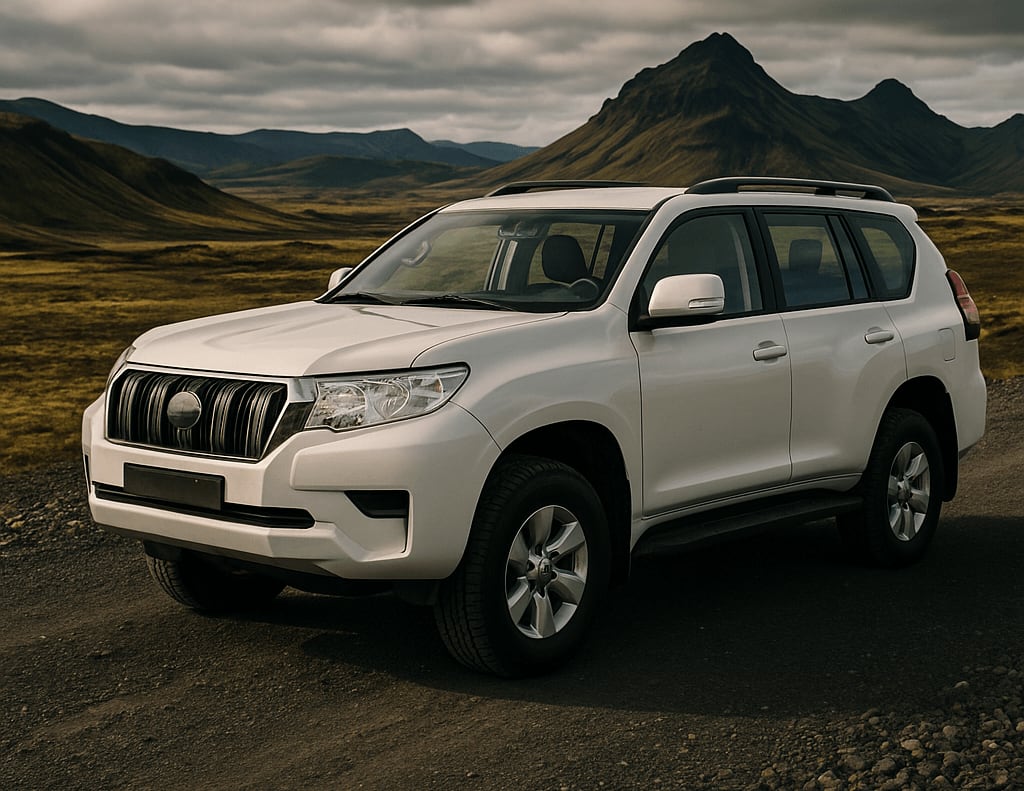
- Larger 4x4s (like Land Cruiser or Defender): Built for serious terrain, winter, and river crossings.
Check if your vehicle is approved for F-roads before booking. Not all 4WDs are permitted.
Quick Vehicle Chooser
| Your Travel Plan | Best Vehicle Type |
|---|---|
| Staying in Reykjavík only | Economy or Compact 2WD |
| Golden Circle in summer | Compact 2WD or Small SUV |
| Visiting the South Coast in winter | 4x4 SUV |
| Exploring the Highlands or F-roads | High-clearance 4x4 (e.g. Land Cruiser) |
| Traveling with a group of 5+ | 4x4 Van or SUV with large cargo space |
| Planning to camp | 4x4 Camper or Campervan with heater |
| Visiting in spring or late fall | Mid-size or Full-size 4x4 SUV |
Tip: If you’re unsure about road conditions, it’s always safer to go with a 4x4, especially in winter or rural areas.
What Insurance Do You Need?
In Iceland, insurance isn’t just a formality. It’s a shield against common risks.
Basic Coverage
- Third-Party Liability (TPL): Legally required. Covers damage to others.
- Collision Damage Waiver (CDW): Covers your car but has a high deductible.
Smart Add-Ons
- Super CDW (SCDW): Lowers your deductible significantly.
- Gravel Protection (GP): Covers windshield and body damage from gravel.
- Sand and Ash Protection (SAAP): Critical along the south coast during spring and early summer.
- River Crossing Protection: Some agencies offer it for vehicles allowed on F-roads.
Real Costs of Common Damage
| Issue | Average Cost (ISK) | What Causes It |
|---|---|---|
| Windshield Replacement | 80,000–120,000 | Gravel or temperature cracks |
| Door Hinge Repairs | 200,000–600,000 | Sudden wind gusts |
| Paint Scratches from Gravel | 25,000–75,000 | Loose stones on rural roads |
| Ash Damage to Paint | 500,000+ | Wind-driven ash in dry months |
| Water Damage (Undercarriage) | 500,000+ | F-road river crossings |
These are real, not hypothetical. Many travelers face these expenses every year.
Driving Tips for 4x4 Travelers
- Close car doors with both hands to prevent wind damage.
- Slow down on gravel roads when other cars approach.
- Use lower gears on steep hills and descents.
- Check SafeTravel.is every day before driving.
- Avoid river crossings unless you’re confident.
When You Don't Need a 4x4
- Reykjavík city driving
- Golden Circle in summer
- Ring Road (Route 1) in clear summer weather
Still, even in these cases, having a 4x4 gives peace of mind and flexibility.
What’s the Difference Between 4WD and AWD?
- AWD (All-Wheel Drive): Fine for light snow and summer roads.
- 4WD (Four-Wheel Drive): Needed for river crossings, deep snow, and rough terrain.
If you're unsure, ask your rental provider which system the vehicle has.
What Are F-Roads?
F-roads are unpaved mountain roads that often include:
- Loose gravel
- Sharp rocks
- River crossings
- Steep gradients
They’re typically open from mid-June to mid-September and require high-clearance 4x4s. Driving on them without a suitable vehicle or insurance can be extremely risky.
Final Thoughts
Not everyone needs a 4x4 in Iceland. But if your trip involves anything beyond Reykjavík or the Golden Circle, it’s worth the upgrade. It gives you freedom to explore and confidence that your trip won’t be cut short by impassable roads or surprise weather.
Check availability now and choose the right vehicle for your adventure.